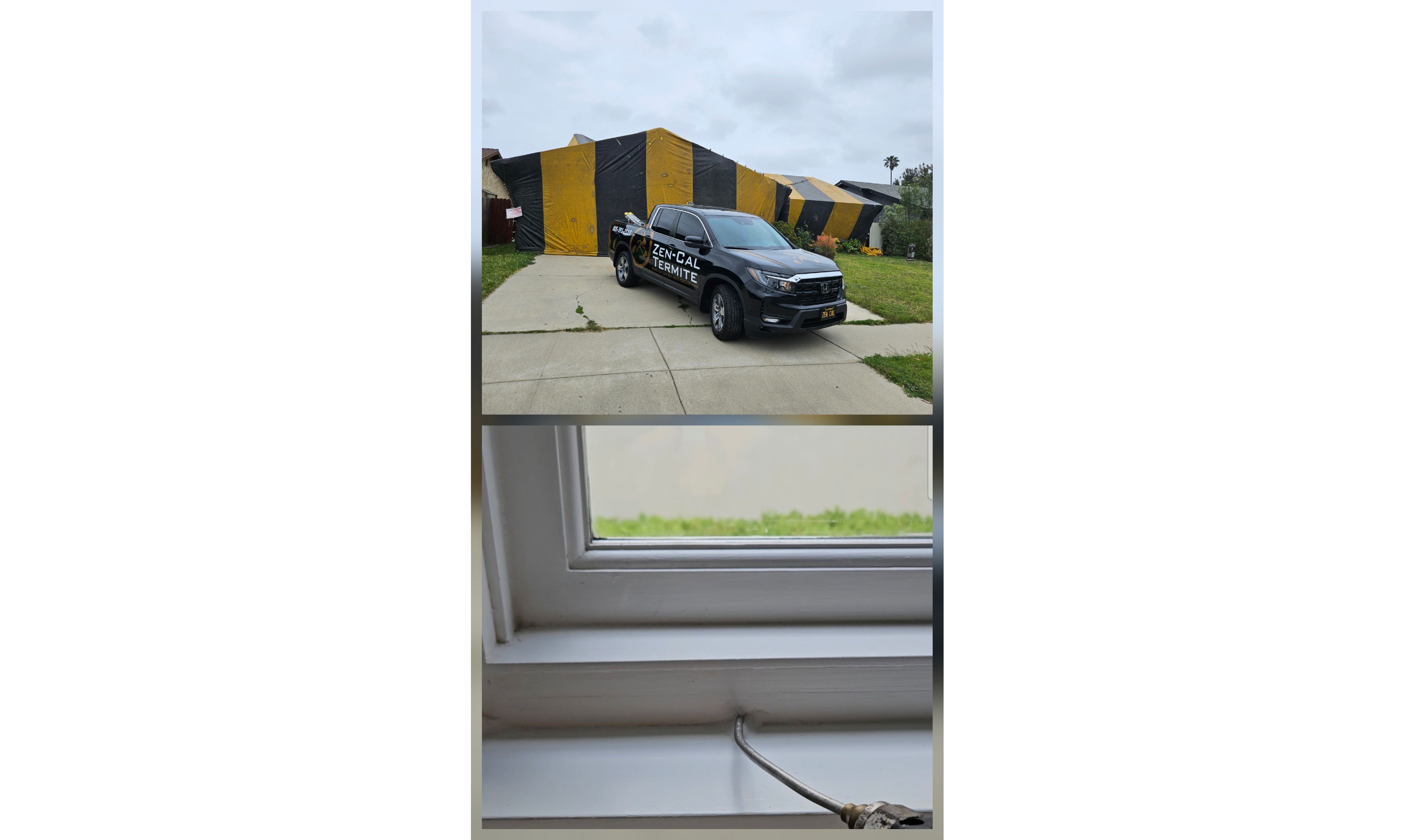
Termites are silent invaders that can cause massive structural damage to your home if not addressed promptly and properly. For California homeowners, especially those in Ventura, Simi Valley, and surrounding areas, understanding the termite treatment options available is crucial to protecting your property and your investment.
When termites are detected, one of the first decisions homeowners face is choosing between spot treatment and whole house fumigation. Each method has its own strengths, limitations, and costs, and the right choice depends on various factors, including the type of termite, the extent of the infestation, and the property’s unique construction and needs.
At Zen-Cal Termite, we aim to educate homeowners so they can make informed decisions about their termite control strategies. In this comprehensive guide, we will break down spot treatment and whole house fumigation, explore the pros and cons of each, and help you determine which approach is best for your situation.
Before diving into comparisons, it's important to understand what spot treatment and whole house fumigation involve.
Spot treatment is a localized approach to termite control where pesticides, foams, or baits are applied directly to the areas where termite activity has been detected. This method is designed to eliminate termites in a specific, confined location without treating the entire structure. Spot treatments may involve drilling into walls, injecting termiticides, or applying surface treatments.
Whole house fumigation, also known as tenting, is a comprehensive treatment where the entire home is enclosed in a gas-tight tent, and a fumigant (typically sulfuryl fluoride) is released inside. The fumigant penetrates all areas of the home, including walls, attic, floors, and furniture, effectively eradicating termites throughout the entire structure.
Both methods are effective in certain situations, but they differ significantly in approach, scope, cost, and homeowner convenience.
One of the main advantages of spot treatment is its minimally invasive nature. Since only targeted areas are treated, homeowners do not need to vacate the property for extended periods, and there’s no need to bag food, medications, or cosmetics.
Spot treatments are generally less expensive than whole house fumigation, making them a budget-friendly option for localized infestations. Additionally, spot treatment methods often use precision techniques, which are eco-friendlier and limit pesticide exposure to small areas.
In situations where the infestation is contained and accessible, spot treatments can be highly effective. For example, if drywood termites are confined to a single window frame, beam, or piece of furniture, a focused spot treatment may resolve the issue without the need for whole house intervention.
The primary downside of spot treatment is its limited scope. Since termites are experts at hiding and can occupy multiple areas without obvious signs, spot treatment may miss unseen infestations in other parts of the structure.
Drywood termites, in particular, can inhabit small, hidden pockets within walls and ceilings, and their colonies often spread to new areas over time. Spot treatment does not guarantee elimination of the entire colony unless all infested areas are located and treated.
This approach may also require follow-up treatments and frequent inspections to ensure that termite activity does not resurface elsewhere in the home. While spot treatment can be cost-effective initially, multiple treatments over time could increase overall expenses.
Whole house fumigation is considered the gold standard for widespread or advanced termite infestations, particularly for drywood termites. This method is comprehensive and ensures that the fumigant reaches every corner of the structure, including areas that are inaccessible to spot treatments, such as inside walls, attics, crawl spaces, and under flooring.
Fumigation effectively eradicates the entire termite colony, providing homeowners with peace of mind that the entire structure is termite-free. This method also kills other pests like ants, cockroaches, and beetles, offering an added benefit.
Another key advantage is the time efficiency. Fumigation usually requires 2 to 3 days, after which the home is aerated, and residents can return to a pest-free property without the need for multiple follow-up treatments.
Despite its effectiveness, whole house fumigation is more invasive and requires significant preparation. Homeowners must vacate the property during the process, and all food, medicines, and certain household items must be sealed or removed.
The cost of fumigation is also higher than spot treatments due to the scale of the process, the need for specialized equipment, and the labor involved. Additionally, fumigation does not provide any residual protection against future termite infestations; it only addresses the current problem.
Some homeowners are also concerned about the environmental impact of fumigation gases, although when handled by licensed professionals like Zen-Cal Termite, safety protocols ensure that the process is safe for both people and the environment.
If the infestation is localized and identified early, spot treatment may be sufficient.
If termites have spread throughout multiple parts of the home, or if the infestation is advanced, whole house fumigation is recommended.
Drywood termites often require fumigation due to their ability to inhabit hidden areas.
Subterranean termites may be managed with spot treatments, bait systems, or soil treatments, depending on the extent of the infestation.
Easily accessible infestations in exposed wood, beams, or furniture are good candidates for spot treatment.
Hidden or widespread infestations throughout the home’s structure are better treated with fumigation.
Spot treatment is generally more affordable and requires minimal homeowner disruption.
Fumigation is more expensive upfront and requires temporary relocation but offers complete eradication.
If you seek immediate and complete elimination of termites with fewer follow-up treatments, fumigation is the preferred choice.
If you are managing a small problem and willing to monitor and retreat as necessary, spot treatment can be a viable short-term solution.
At Zen-Cal Termite, we understand that every home and infestation is unique. That’s why we offer customized treatment plans tailored to your specific needs, termite type, and budget.
Our process begins with a comprehensive inspection using advanced detection tools to accurately assess the extent of the infestation. Based on our findings, we provide homeowners with honest, transparent recommendations outlining the best treatment approach.
In cases where spot treatment is sufficient, we use precision application methods to target the colony directly, minimizing disruption to your home. For more severe infestations, we offer professional whole house fumigation, ensuring the process is conducted safely, efficiently, and with the utmost care for your home and family.
We also advise homeowners on preventative strategies and offer follow-up inspections to ensure that termites do not return, regardless of the treatment method used.
To illustrate the decision-making process, let’s consider two real-world cases from Simi Valley.
Case 1: Spot Treatment Success
A homeowner discovered drywood termite frass near a single window frame. Our inspection revealed that the infestation was confined to that specific area. We performed a localized spot treatment, carefully injecting a termiticide foam directly into the affected wood. The problem was resolved, and the homeowner avoided the cost and inconvenience of fumigation.
Case 2: Fumigation Was the Only Option
Another homeowner noticed swarming termites in multiple rooms. Our inspection found drywood termite activity throughout the attic, walls, and multiple areas of the house. Spot treatment would not have been effective, as many colonies were hidden. Whole house fumigation was recommended and successfully eradicated the termites from the entire structure, saving the home from extensive structural damage.
These cases demonstrate the importance of professional assessment in determining the right treatment method.
Both spot treatment and whole house fumigation have their place in termite control. The key to making the right choice lies in an accurate, thorough assessment of your specific situation. Spot treatment offers a less invasive, budget-friendly option for localized infestations, while fumigation provides total eradication for widespread or severe infestations.
At Zen-Cal Termite, we pride ourselves on offering honest, expert advice to help homeowners make informed decisions. Our experienced technicians use state-of-the-art tools and techniques to assess the extent of the problem and recommend the most effective treatment plan for your home.
Don’t gamble with your home’s safety—schedule a termite inspection with Zen-Cal Termite today and let our experts help you determine whether spot treatment, fumigation, or a combination of both is right for your property.