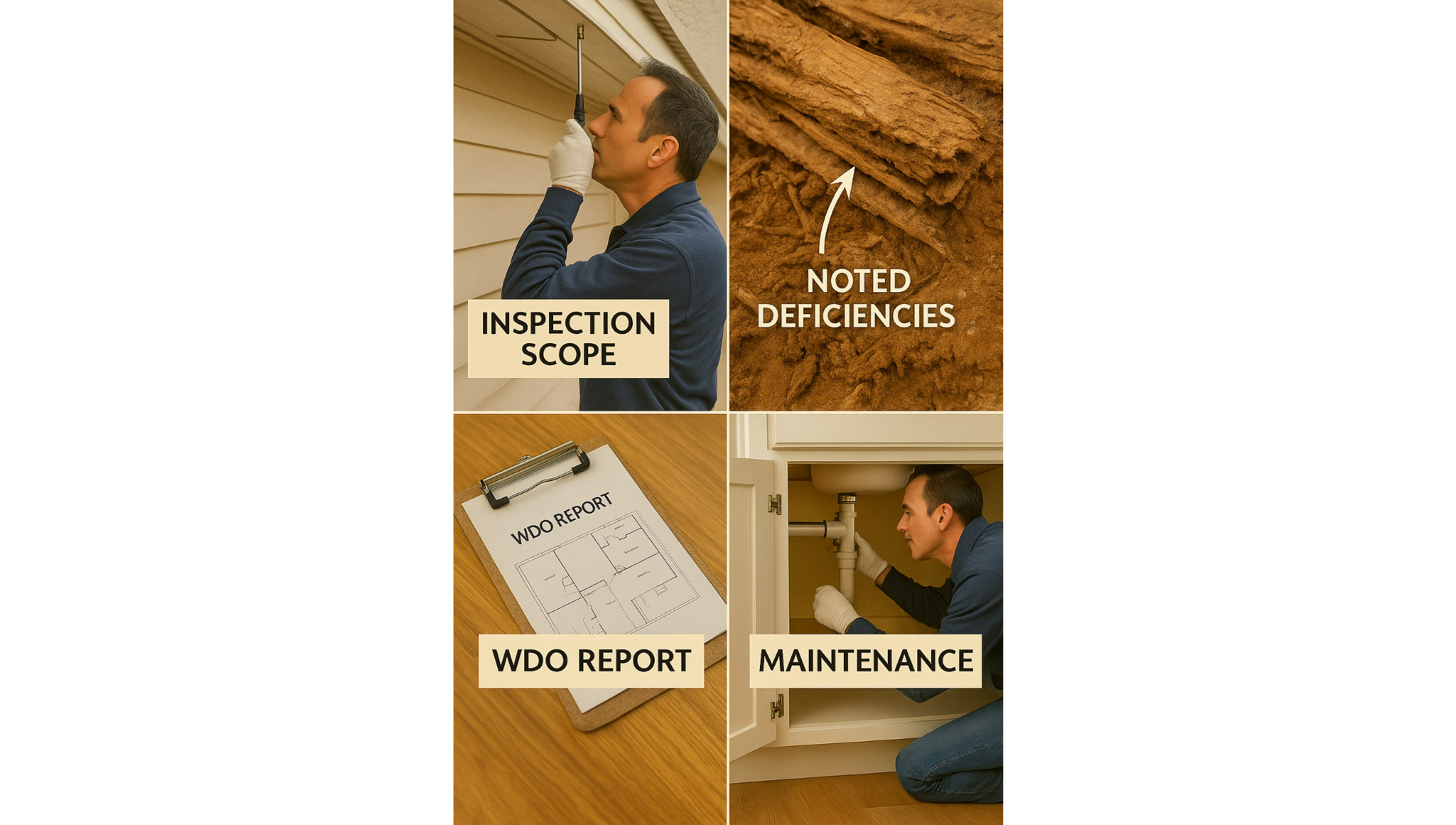
You want to protect your home. Whether you're buying, selling, or simply taking care of what you’ve built, no homeowner wants to be blindsided by unexpected termite damage.
But when you get a WDO report—a termite inspection report—it can feel overwhelming. What does “Section 1” really mean? Is the damage serious? Who’s supposed to pay for this?
At Zen-Cal Termite, we’ve helped thousands of California homeowners get answers, take action, and protect their most valuable investment.
A termite inspection is a visual, non-invasive examination of a home or structure to identify wood-destroying organisms (WDOs), most commonly termites.
Why it Matters: Termites can cause thousands of dollars in hidden damage, and early detection is the best way to avoid costly repairs.
Who Performs It: Only a licensed structural pest control inspector in California can perform a legal termite inspection.
When Is It Needed:
- Real Estate Transactions
- Remodeling
- Annual Maintenance
- For Peace of Mind
California’s Role: The Structural Pest Control Board regulates inspections and reporting standards across the state.
A WDO report stands for Wood-Destroying Organism report. While people often call it a termite inspection report, it actually includes more than just termites.
What’s Included:
- Termites (Subterranean and Drywood)
- Wood-destroying fungi
- Carpenter ants or beetles
- Conducive conditions {conditions that may lead up to an infestation}
WDO vs. General Pest Report: A WDO report focuses on wood-destroying threats. A general pest control report might include pests like ants and roaches.
What It Contains:
- Inspector license information
- Diagrams
- Descriptions of findings
- Treatment recommendations
- Section 1 and 2 notes
"Section 1 Findings": Active infestation or visible termite damage.
"Section 2 Recommendations": Conducive conditions or past evidence of damage.
"Inaccessible Areas": Parts of the property not inspected.
"Structural vs Cosmetic Damage": Structural = critical elements; Cosmetic = surface-level signs.
Section 1: Active infestation or visible damage. In real estate transactions, the seller usually pays for this.
Section 2: Past damage or conducive conditions. Responsibility is negotiable.
Ignoring either section can lead to major expenses.
Ignoring termite damage doesn’t make it go away.
- Termite go deeper in the wood= harder to spot until damage is noticed.
Real-Life Examples:
- A small termite treatment turned into a major repair.
- Skipping a termite inspection led to remodel delays.
Termite Inspections Are Affordable Insurance: A small fee now saves thousands later.
- After initial treatment- yearly insurance typically runs only $425-550 depending on sq ft.
Thousand Oaks lies in a region with a high termite risk zone designation, due to its combination of warm temperatures, mild winters, and varied soil moisture levels. Add in the abundance of older wood-framed homes, shaded tree-lined streets, and occasional wet winters, and you’ve got an ideal environment for both subterranean and drywood termites to thrive.
What makes it worse is that many termite infestations remain invisible for years. Homeowners only discover them during remodels, roof work, or when damage becomes visibly obvious—which can be far more costly to repair than early intervention.
1-How often should I get a termite inspection?
In Southern California’s warm climate, it’s recommended to get a termite inspection annually, before buying or selling a home, and when in doubt.
2-Do I need one if I don’t see signs?
Yes. Trained specialists have detection methods to spot termite activity before the untrained eye does.
3-What does a termite inspection involve?
A licensed inspector will examine your home-inside, outside, attic, garage, and crawlspace- for signs of infestation or damage. The technician also look for conditions that attract termites, like moisture or wood-to-soil contact.
4- Are the products used safe for family and pets?
Zen-Cal Termite uses eco-friendly and EPA-approved products. Still, precautions are taken during treatments{ just like all the products under the kitchen sink- use properly}.
- Read your termite report carefully
- Get a repair estimate
- Create a preventative plan
- Keep your records
What Matters:
- Clear explanations
- Detailed reports
- Dual capability for treatment and repair
Why Zen-Cal Termite:
- 15+ years in CA = locally owned
- Eco-friendly options
- Trusted, licensed pros
Your home deserves protection—and you deserve peace of mind.
Don’t let termite damage grow silently. Understand your termite inspection {WDO} report. Take action early. Let Zen-Cal Termite help you protect what matters most.
Let us walk you through your report, answer every question, and bring ZEN back to your family.